Miss Pym and a Friend

Tuesday, March 13, 2018
Leprechauns and Dolls in Green - Ruby Lane Blog
Leprechauns and Dolls in Green - Ruby Lane Blog: 1909 German St. Patrick’s Day Embossed Postcard Irish Lady in Green Dress St Patrick’s Irish Boudoir Bed Doll Red Hair Shamrock Dress It’s almost that time for all things green. Leprechauns all over are gearing up to wear the green and toast the emerald isle! Dolls in green look wonderful displayed around shamrocks and other... Read more »

Thursday, March 8, 2018
The Four Humors and Sex and the City; some Thoughts
 |
| PD Image |
According to lonerwolf.com, "Specifically, the Four Humors were: black bile, while was associated with the Melancholic person; yellow bile, which was associated with the Choleric person; blood, which was associated with the Sanguine person; and phlegm, which was associated with the phlegmatic person." (2018).
The idea of the four humors dates to Ancient Greek mediceine and possibly earlier, but really was popular during the Middle Ages and even later during the Renaissance.
I submit that the four heroines of SATC, Samantha, Carrie, Charlotte, and Miranda, each personify one aspect of the four humors, which when balanced and blended correctly in the human body, create one healthy person.
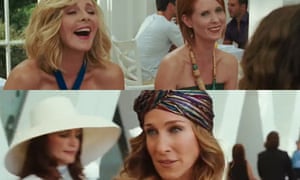 |
| Top L to R, Kim Cattrall, Cynthia Nixon, Kristen Davis, and Sarah Jessica Parker |
Charlotte might be more Phlegmatic with her upper class, staid and proper notions; she often has to be jarred into reality.
Samantha of the voracious passions and appetite is more Choleric.
Carrie, the glue holding them all together with her optimism and imagination, is the Sanguine person.
A great book on a related topic is Robert Burton's Anatomy of Melancholy, a 17th century text still in print.
 |
| Public Domain Image |
International Women's Day
We salute all the excellent woman of the world, past and present, who have contributed to history. Today, especially, I thank women in politics from all nations, who have added their voices towards addressing global issues affecting all of us.
In the US, we salute Abigail Adams, and our other First Ladies, and those who have run for office and been elected, including, but certainly not limited to, Libby Dole, Geraldine Ferraro, Shirley Chisolm, Barbara Jordan, Sarah Palin, Hillary Clinton, Diane Feinstein, and around the world, Golda Meir, Angela Merkel, Indirha Gandhi, Margaret Thatcher, Glenda Jackson, and more.
News stories yesterday included one of former Sex and the City star Cynthia Nixon considering a run for governor of New York, and we wish her well.
Women have been active in political and social issues since before this country was founded in The New World. Arguably, the first activist re American matters may have been the controversial but iconic Isabella of Spain, mother of Katharine of Aragon, who advocated for Columbus to sail on his voyages which lead him to North America. From there, women as diverse as Adams, Sor Juana Ines de la Cruz, Betsy Ross, Dolley Madison, Martha Washington, Sojourner Truth, Harriet Tubman, Edith Wilson, Helen Hunt Jackson, and many others have shaped American history, politics and culture, culminating in The Suffragettes who helped us get the vote finally.
Long may their memories live, and long may we prosper in any role we as women chose to take on.
In the spirit of Pym, they are all excellent women.
In the US, we salute Abigail Adams, and our other First Ladies, and those who have run for office and been elected, including, but certainly not limited to, Libby Dole, Geraldine Ferraro, Shirley Chisolm, Barbara Jordan, Sarah Palin, Hillary Clinton, Diane Feinstein, and around the world, Golda Meir, Angela Merkel, Indirha Gandhi, Margaret Thatcher, Glenda Jackson, and more.
News stories yesterday included one of former Sex and the City star Cynthia Nixon considering a run for governor of New York, and we wish her well.
Women have been active in political and social issues since before this country was founded in The New World. Arguably, the first activist re American matters may have been the controversial but iconic Isabella of Spain, mother of Katharine of Aragon, who advocated for Columbus to sail on his voyages which lead him to North America. From there, women as diverse as Adams, Sor Juana Ines de la Cruz, Betsy Ross, Dolley Madison, Martha Washington, Sojourner Truth, Harriet Tubman, Edith Wilson, Helen Hunt Jackson, and many others have shaped American history, politics and culture, culminating in The Suffragettes who helped us get the vote finally.
Long may their memories live, and long may we prosper in any role we as women chose to take on.
In the spirit of Pym, they are all excellent women.
RIP These Excellent Writers; Sue Grafton, Sam Shephard, Steven Pirsig, and Ed McBain
We salute these noted writers who have recently passed away. Each contributed something necessary to the worlds of books and literature, and the unique voice of each will not be stilled, but will live on in his-her work.
To paraphrase, FDR, every time a writer dies,part of the vision of mankind passes with him or her.
RIP.
To paraphrase, FDR, every time a writer dies,part of the vision of mankind passes with him or her.
RIP.
From the Bristol Hotel

Here, from the Bristol breakfast room, is a lovely portrait of HRH Queen Elizabeth II. It was great fun staying there amid the renaissance antique and Victorian reproductions There was an atmosphere that made me think of Pym herself walking in.
Monday, February 5, 2018
Time's Been Up for Women who are Working Stiffs
Time’s Been Up, and this post is also on LinkedIn.
You’d have to live in a very, very subterranean cave to have
missed the new stories on sexual harassment against women, particularly in the
entertainment industry. Yet, some of us have been experiencing this type of
behavior for years. I’m not a movie
start, nor am I a beauty queen. Yet, I’ve
had all kinds of negative occurrences with men professionally, or academically.
In junior high and high school, the pervading
atmosphere was boys will be boys. Complaining
about being grabbed or having your bra snapped made you, well, “one of those.” In fact, when I worked in California
Then, of course, there was law school and graduate
school. We ended up having university
rules about dating students because so many linked up with their profs. The
rest of us actually had to study. So,
yes, the atmosphere of “romance” affected opportunities for me and the others
who didn’t get invited to out of town “study” weekends, or who didn’t go to drinking
parties that morphed into engagement parties. By the time I graduated, I had
school mates who wanted to hook me up with one of our professors. I declined, but many others didn’t. It was one way to get a job, I guess. We have legal clerkships and academic
internships, while others have casting couches and auditions.
Back up a bit to college; another summer work study kept
inviting me into his van. I didn’t
accept his invitation. Thereafter, he
was rude and standoffish. If I’d thought if it, I would have written a bad
song. Other men felt they had the right
to comment about my figure, make up, clothes, ethnicity, “Greek girls are hot!”
and my intellect. I might have been an A
student and in Phi Bet Kappa, but some subjects were too “hard” for me,
especially in math and astronomy, or so one male co-worker explained to me. How
very kind of him.
While I was a teacher, I had students who wrote strange love
notes, some graphic. I ignored them. If
it got very bad, like the young man who followed me around trying to intimidate
me over a grade, or the male stripper who kept grabbing his privates in front
of me, I went to the dean. I put off
one persistent flirt with “don’t be weird.”
That seemed to work. Colleagues
were harder. One young man had a
reputation for asking out the women at the office, including me. He also liked to pick up girls in bars. When
he had a little too much to drink, he knocked them around. We knew about his behavior; I complained one
day. He asked me to leave my office so
he could go in to remove his pants. No kidding; he wanted to go roller blading
in the middle of the day. At least the senior
partner took after him that time and chastised him, but that was rare. The blue jokes were part of the office
culture. We also had one senior employee
comment that the poster in the lounge explaining Title VII was “just the rule
book.” Later on, in schools, I had
supervisors who would hunt out a woman to shout at whenever a man did something
wrong. Men were never screamed at or
verbally abused, only women. At reviews,
we learned our paperwork had to be “sexier.” Officers I knew and worked with made lots of
fun comments about female victims in stalking cases and their dating
preferences. Men were allowed to demean
women by calling them by their first names, even after the women requested they
be addressed professionally, by their well-earned titles. Men were promoted
over women unfairly; if a woman complained, she was told she was being too
personal and emotional. Male employees
were allowed to touch and punch women. One
male supervisor, when confronted, stated we would just “have to get used to it.”
He
also stated he liked hiring pregnant women because they looked so cute “waddling
around.” Another male employee made comments about how many times women went to
the restroom, or showed us pornographic photos on his phone. We were told not to confront him; it might
hurt his feelings.
These were the mild examples. I, and the other women I worked with,
suffered through more. Others ended up
in the news for domestic abuse and criminal assault cases and crimes all the
way up to attempted murder and murder.
None of us had an agent or million dollar contracts. The courts are full of cases dealing with
sexual harassment on the job. Ask me,
and I’ll name some. I would also
recommend Larson’s treatise on Employment Discrimination if you want to read
more. I have nothing against The Oprah, but all she did in her now famous TV
diatribe was to state the obvious. She
was preaching to the Norma Ray choirs of women like me who have experienced
sexual harassment and discrimination on the job and in the public sector for
years. When we complained, we were
silenced, threatened, ignored, or forced to endure lengthy, expensive law
suits. We learned to deal with it, and
to do our jobs. I’m glad that light is
being shed on this messy, painful issue, but it’s a shame that nothing really
took off till a bunch of millionaires and billionaires became involved.
Sunday, February 4, 2018
The Subversion of Romance in the Novels of Barbara Pym
Romance can be delicious, or it can leave a bitter taste in your mouth. And, what to wear through the dramatic scenes that must needs leave our emotions in tatters, but leave us looking like well-groomed, well-styled fashion plates! The Subversion of Romance in the Novels of Barbara Pym answers those questions and more, in a critical, sometimes tongue in cheek study of Pym's novels and how themes of heroes, heroines, food, and clothing are treated in her work. Read the book, and find the answer to the most important question of all, "where are the trollies of yesteryear . . . . . . ."Available from The University of Wisconsin Press.


Subscribe to:
Posts (Atom)